
Meme Soundboard 2026 Ultimate
elad appsCasual
4.71.76K Reviews
- Version
- 2.0.45
- Installs
- 5.00M
- Age Rating
- Teen
Screenshots
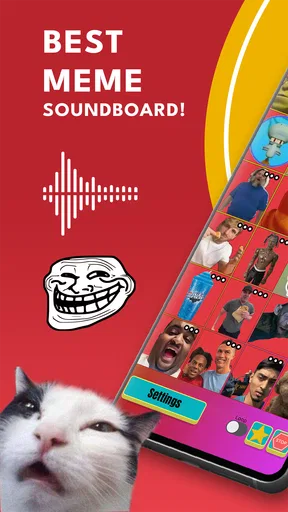
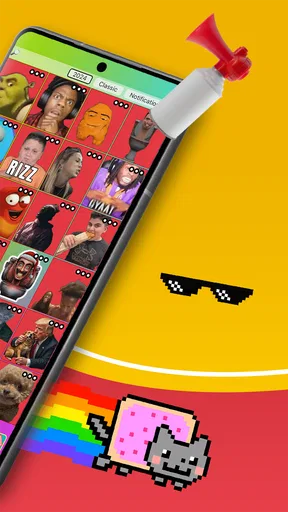
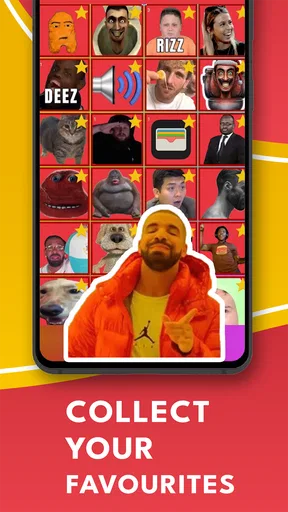

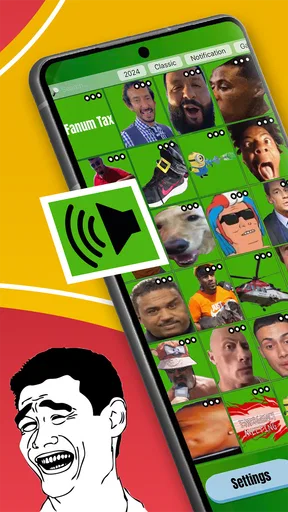
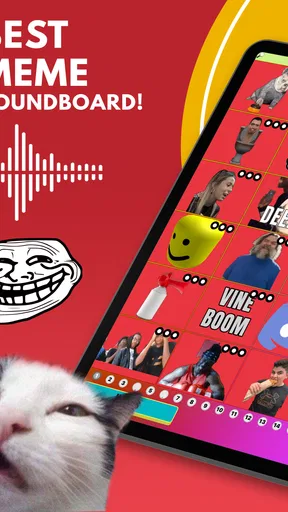
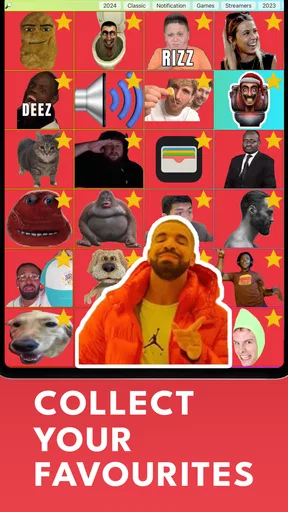
Our Review of Meme Soundboard 2026 Ultimate
 Analysis by Appyee
I tried Meme Soundboard 2026 Ultimate as the sort of casual app you open when a conversation needs a quick laugh rather than a long gaming session. It is a soundboard game from elad apps, built around short meme-style audio clips that you can browse and trigger with a tap. The idea is simple, but the usefulness depends almost entirely on how quickly you can find the right sound and whether the collection matches your sense of humor.
That simplicity is the main reason it is easy to understand. There is no complicated tutorial to study and no deep progression system to learn before the app becomes entertaining. I could treat it as a small collection of reaction buttons: open it, scan the available choices, tap one, and move on. For casual users, that low commitment is a genuine advantage.
At the same time, I would not describe it as a conventional game with levels, strategy, or a long-term challenge. It fits better into the casual category because the entertainment comes from choosing the right sound at the right moment. If you want a traditional game with goals and measurable progress, this will probably feel limited. If you want a playful audio tool for jokes, reactions, and group moments, its purpose is much clearer.
How the current version feels in everyday use
The current release is version 2.0.45, and the app has been available since November 9, 2020. That history matters because a soundboard is more useful when it feels like an established product rather than a one-off experiment. Its audience has grown to over 5 million installs, with an average rating of 4.7 from around 53 thousand ratings and roughly 1.8 thousand written reviews. Those figures suggest that the basic concept has found a substantial audience, although they do not replace personal testing: humor is subjective, and a large collection is only helpful when its organization works for you.
I found the best way to approach it was not as something to play continuously, but as a companion for short social situations. It can work while chatting with friends, during a video call when everyone is comfortable with a little silliness, or when you want to add an exaggerated reaction to a message. The app is also suited to people who enjoy collecting recognizable sounds without wanting to edit audio or build a soundboard from scratch.
A realistic example is a group chat where somebody makes an unexpectedly dramatic announcement. Instead of typing a long response, I can open the board, look for a fitting reaction, and play it aloud. The joke works because the response is immediate. If I have to search through too many unrelated sounds, the moment disappears, so the browsing experience is more important here than it might seem from the short description.
The strongest part is the instant reaction
The central interaction is deliberately uncomplicated: choose a sound and trigger it. That makes the app approachable for people who would never spend time learning an audio editor. It also makes it suitable for passing around in a group, because another person can understand the basic action almost immediately.
One useful habit is to spend a few minutes exploring before using it socially. I would not wait until the funniest moment arrives to discover where the relevant sounds are located. Familiarizing yourself with the layout turns the app from a novelty into a faster reaction tool. This is especially helpful when the humor depends on timing rather than on the sound itself.
Another practical tip is to treat the board as a set of moods instead of trying to remember every individual clip. I mentally group sounds into reactions such as surprise, disbelief, celebration, annoyance, or absurdity. That approach reduces browsing time and makes it easier to choose something that fits the conversation. It is a small workflow improvement, but it makes a large difference in a soundboard because hesitation weakens the punchline.
Where the recent version matters
The move to the current 2.0.45 release gives existing users a clear reference point when deciding whether to update. I would approach it as the version to evaluate now, rather than assuming that an older installation represents the present experience. Updates can change how a familiar app feels, particularly when the main product is a large, frequently browsed collection.
However, I would separate what is confirmed from what I might hope to see next. The version number and release history show that the app has continued to evolve, but they do not by themselves prove a particular new feature, redesign, or sound category. I would not install it expecting a specific improvement unless the change is clearly described in the current store information. That is a sensible rule for returning users who already know an earlier edition.
For someone installing it for the first time, the practical question is simpler: does the current board provide enough variety and easy access for the way you plan to use it? The answer will depend on your preferred humor and on whether you want quick browsing or a more controlled personal library. The app’s broad appeal comes from its immediacy, not from offering the same depth as a dedicated audio-creation tool.
What existing users may notice
People who have used a previous version may appreciate having a newer baseline to work from, but they should still give themselves time to adjust if the arrangement of sounds feels different. A soundboard becomes part of muscle memory: regular users remember where their favorite reactions are, so even a small change in placement can initially feel inconvenient.
My advice for returning users is to test the app before relying on it for a planned joke, stream, party, or group activity. Check whether your familiar choices are easy to reach, then identify a few alternatives. This creates a backup when a particular sound does not fit the moment or when several people want to participate at once.
There is also a social consideration. A sound that is funny among close friends may be distracting or uncomfortable around strangers, colleagues, younger listeners, or people who do not share the same online culture. The content rating is Teen, so I would still use judgment about where and with whom I play clips. A board designed for meme reactions is not automatically appropriate for every audience.
Free access and the role of purchases
The game is free to download, which makes trying it low-risk. That is important for this kind of app because the value is personal: some users will immediately recognize the style of humor, while others may find the whole format repetitive. You can explore the basic experience before deciding whether it deserves a regular place on your phone.
There are in-app purchases ranging from $0.99 to $24.99 per item. I would keep that in mind before treating the app as a completely cost-free collection. The free starting point is useful, but anyone who wants to unlock more of the experience should check each purchase carefully and consider whether the extra material will actually be used.
My practical approach would be to use the free version long enough to identify a real limitation in your own routine. If you rarely open the board, buying additional content is unlikely to solve anything. If you use it regularly and find yourself repeatedly looking for sounds that are not available to you, a purchase may be more reasonable. That is a better decision process than paying simply because the catalog looks large.
How it compares with ordinary alternatives
The most obvious alternative is a messaging app’s built-in emoji, GIF, or sticker collection. Those options are faster when the conversation is text-based and less disruptive when other people are nearby. They also leave a written or visual response instead of requiring everyone to hear audio. For quiet environments, a GIF may be the better choice.
A personal audio folder or a full sound-editing app offers more control, but it also demands more preparation. You may need to find clips, trim them, label them, and organize them yourself. This soundboard’s advantage is convenience: it gives casual users a ready-made way to react without turning the hobby into a small production project.
Dedicated creator tools are still better for podcasts, videos, live performances, or carefully timed streams. They generally make more sense when you need recording, mixing, custom sequencing, or precise volume control. I would choose this app for spontaneous humor, not as a replacement for professional audio software.
There is a middle ground too: a custom soundboard can be more personal because every button reflects your own taste. The trade-off is maintenance. You have to build and update it yourself. Meme Soundboard 2026 Ultimate is more convenient for someone who values immediate variety over complete ownership of the collection.
Small workflows that make it more useful
One non-obvious strength is that it can function as a social prompt. Instead of waiting for a perfect joke, I can browse a few reaction styles and let the available sounds suggest a playful response. That works particularly well in groups where the conversation has become repetitive. The board changes the rhythm without requiring anyone to start a new activity.
A second useful workflow is to prepare a short personal rotation. Rather than opening the app and wandering through everything, I would identify a handful of reliable reactions for common situations: agreement, confusion, mock outrage, celebration, and an intentionally over-the-top response. This makes the app feel faster and avoids the common soundboard problem of spending more time searching than enjoying.
A third trade-off involves volume and setting. Audio humor is powerful because it is immediate, but it can also interrupt people nearby. I would use headphones or keep the volume modest when the situation calls for it. The app is at its best when the sound adds to the moment, not when it becomes the entire event by accident.
Finally, I would avoid treating every clip as equally reusable. A sound can be hilarious once and tiring after repeated use. Rotating reactions preserves their impact. This is especially important for a board with a large selection: variety is most valuable when you actually let the less familiar choices appear in your routine.
Where the experience still has limits
The biggest limitation is inherent to the format. A soundboard can be entertaining without offering much depth. Once the novelty fades, the app’s staying power depends on how often you have a social use for it. Someone looking for a game to occupy a long commute or provide a structured challenge may quickly run out of reasons to keep tapping.
Search and organization also matter more than they would in a small collection. If the board does not make your preferred sounds easy to locate, the number of available choices becomes less meaningful. I would judge the app by the speed of finding a fitting reaction, not by the size of the catalog alone.
Another limitation is that audio depends on context. You need a suitable moment, an audible device, and people who are willing to participate. In a library, office, public transport, or quiet home, the same feature that makes the app funny can make it impractical. Text reactions and visual memes are more flexible in those situations.
The purchase model may also affect how complete the free experience feels to different users. Since individual items can cost from $0.99 up to $24.99, I would avoid assuming that every sound is available without spending. The free download is a good way to test the concept, but budget-conscious users should decide in advance whether optional purchases fit their expectations.
Who should try it, and who should skip it
I would recommend it to people who already enjoy meme culture, quick audio reactions, and casual group humor. It is particularly suitable for users who want something lighter than a full game and more immediate than creating a custom sound library. It can also be a fun addition to a small gathering when everyone understands that the board is there for occasional comic timing rather than constant noise.
I would be more cautious about recommending it to someone who wants a serious game, a quiet solo activity, or a tool for producing polished audio. It is not the right choice if your main goal is recording original sounds, editing clips, or building a carefully curated professional setup. A messaging app is better for silent reactions, while dedicated audio software is better for control.
Device compatibility is relatively broad: the app requires Android 7.0 or later. That makes it accessible to people who are not using the newest phone, although current performance can still vary with the device and its audio setup. Before using it in a public setting, I would test playback, speaker volume, and the way the app behaves when switching between it and another conversation.
What I would watch in future updates
For future development, I would pay attention to improvements that make a large collection easier to manage rather than simply adding more sounds. Faster discovery, clearer grouping, and a smoother way to return to favorite reactions would have a direct effect on everyday usefulness. In a soundboard, organization is not decoration; it determines whether the joke arrives on time.
I would also watch how the current version affects long-term users. A returning fan needs continuity, while a new user needs an understandable starting point. The best evolution would respect familiar habits without making the board feel closed to newcomers. That balance is more important than change for its own sake.
Another area worth watching is the relationship between free access and optional purchases. The app is easiest to recommend when a newcomer can understand its appeal without immediately feeling pressured to buy. Clear expectations around what is available at no cost would help users decide whether the collection suits them before spending money.
It would also be useful to see continued attention to context and audience. Since the rating is Teen, responsible use still belongs to the user, but thoughtful organization and clear presentation can make it easier to choose appropriate reactions. A soundboard becomes more versatile when it supports quick selection without encouraging indiscriminate playback.
My final take after using it
Meme Soundboard 2026 Ultimate succeeds because it does not ask the user to learn much before having fun. Its appeal is immediate, social, and intentionally lightweight. I like it most as a reaction companion: something I open for a few seconds when a conversation needs an exaggerated sound instead of another typed message.
The current version gives new users a straightforward entry point, while the app’s established presence shows that the concept has lasted beyond a brief novelty. Still, I would keep expectations realistic. This is not a deep game, and it is not a replacement for custom audio software. Its value comes from quick access to meme-style sounds, not from complex mechanics or production controls.
My recommendation is simple: try it if you want fast, playful audio reactions, but skip it if you need structured gameplay or serious sound editing. Use the free version to test whether the humor fits your group, prepare a small rotation of favorite reactions, and be selective with purchases. When the timing is right, the app can turn an ordinary exchange into a genuinely funny moment; when the setting is wrong or the browsing takes too long, a GIF, sticker, or custom tool will serve you better.
Verdict
Strengths of Meme Soundboard 2026 Ultimate
- Large collection of popular meme sounds for quick access.
- Simple interface makes finding clips fast and straightforward.
- Useful search and category options for browsing sound effects.
- Sounds can add humor to chats, videos, and social media posts.
- Frequent content updates may keep the sound library feeling fresh.
Limitations of Meme Soundboard 2026 Ultimate
- Some sounds may require an internet connection to play or download.
- Audio quality can vary noticeably between different meme clips.
- Advertising may interrupt browsing or become distracting during use.
- The library may include outdated memes as trends change quickly.
- Permissions and privacy details should be checked before using the app.
Similar Picks in This Category
View All
My Talking Angela
Outfit7 Limited4.2

My Talking Tom
Outfit7 Limited4.3

Pou
Zakeh4.2

My Talking Tom 2: Pet Game
Outfit7 Limited4.3

Candy Crush Saga
King4.6

Bridge Race
Supersonic Studios LTD4.1
Frequently Asked Questions
What is Meme Soundboard 2026 Ultimate?
Meme Soundboard 2026 Ultimate is an entertainment app that collects popular meme sounds, viral audio clips, reaction effects, and humorous voice lines in one place. After testing the app, it feels designed for quick playback rather than music production, making it useful for sharing jokes, adding sound effects to conversations, or entertaining friends. The exact sound library may vary by version and region.
Is Meme Soundboard 2026 Ultimate free to download and use?
The app may be available as a free download, but users should check the current store listing carefully because access to certain sounds, extra categories, or an ad-free experience can depend on the version installed. Some features may be supported by advertising or optional in-app purchases. Before downloading, review the app’s pricing section, subscription details, and cancellation terms to avoid unexpected charges.
Can I use the meme sounds offline?
Many soundboard apps allow previously loaded audio clips to play without an active internet connection, but offline availability can depend on how Meme Soundboard 2026 Ultimate stores its sound files. Some content, updates, advertisements, or online sharing features may still require internet access. It is a good idea to open the sounds you want while connected, then test airplane mode before relying on the app offline.
Can I share the sounds or use them in videos and social media posts?
The app is mainly intended for personal entertainment and quick playback, while sharing options may depend on the device and the apps installed on it. If you plan to use a sound in a YouTube video, livestream, podcast, advertisement, or other public project, check its copyright and licensing status first. Viral audio does not automatically mean it is free for commercial or public use.
Is Meme Soundboard 2026 Ultimate safe for children and privacy-conscious users?
The app’s suitability depends on the individual sounds, advertisements, external links, and permissions included in the current release. Some meme audio can contain profanity, suggestive jokes, or mature references, so parents should preview the content before allowing younger users to use it. During installation, review requested permissions and the privacy policy, particularly if the app asks for access unrelated to basic audio playback.
Play our best games!


